
Par Alice – Le 14 Juin 2026
Six years after “Under a Godless Veil”, Draconian is back with I”n Somnolent Ruin”, an album born out of turmoil, shaped by a pandemic, self-doubt, and renewal. Anders Jacobsson and Niklas Nord look back on the shifts in dynamic and lineup, the long writing process, and the themes running through this record: the soul trapped in flesh, oblivion, and the search for meaning that defines this new chapter.
To begin with, a lot has happened in the six years since “Under a Godless Veil” : personally, collectively, the world has changed, and so has the band’s lineup. Would you say In “Somnolent Ruin” represents a whole new chapter for Draconian?
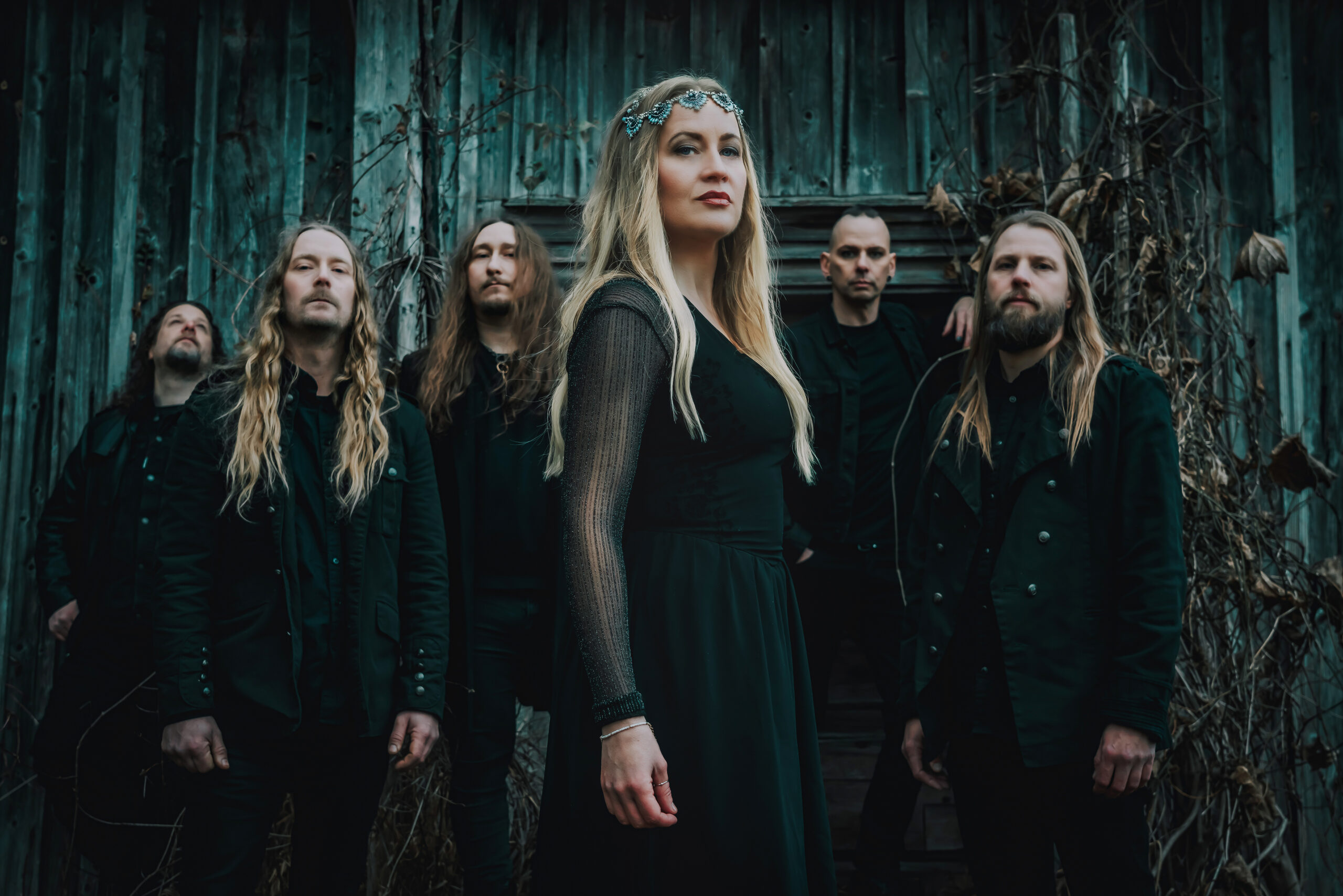
Anders : It’s a whole new chapter for many reasons. A lot has happened since the last time, and the lineup changes speak for themselves: Niklas Nord joined the band, Daniel Johansson went from session drummer to full member, replacing Jerry Torstensson, and Lisa Johansson came back. So yes, it’s clearly a new chapter. And yet, everything feels familiar and so much more fluid, things are working really well between us right now. Even though it hasn’t been easy, psychologically, to keep going over the years, between the Covid situation, the internal changes, and everything we went through trying to find our footing. This new album is the culmination of all of that, and it’s an immense joy to finally see it come out.
Niklas, you joined the band relatively recently, it was easy to find your place?
Niklas : Yes, I think so. I was welcomed with open arms. I was contacted by Anders and Johan just after the release of “Under a Godless Veil” to go on tour which was postponed, then cancelled, three times! That’s how it all started. But I think I’ve found my place. It takes time to integrate into a band with as much history as Draconian, with so many great albums and songs, and to try to bring your own touch to it, to make those songs your own. I think it really happened during the last tour, the one we were talking about just before the interview (the 30th anniversary tour with Nailed to Obscurity and Fragment Soul) and especially our show in Kortrijk, Belgium, which you reviewed. It’s an incredible journey to be able to both carry on the band’s legacy, play those older songs, and now have the opportunity to contribute to the new album and be part of this new chapter. It’s an incredible experience. I couldn’t have dreamed of anything better.
Yes, I imagine touring together gave you time to get to know each other and see how everyone worked. And regarding Lisa’s return to the band, had you stayed in touch with her over all those years? When did you realize she might be ready to come back?
Anders : Over those ten years she wasn’t in the band, I know that Johan ( guitarist and main composer of the band) and his ex-wife stayed in contact with people in our circle, including the family of our former drummer Jerry, who knew Lisa and her family well. On my end, I only spoke to her two or three times over those ten years. But when the moment finally came to make that call and speak to her for the very first time in a ‘Draconian context’, so to speak, it felt completely natural. We found out she had actually been thinking about Draconian for a year or two, and that she almost regretted having left. She wanted to be involved again in some way it was a bit of a secret dream of hers.
She was absolutely ready when we first asked her to join us as a session member for live shows. Heike Langhans wanted to take a step back, focus on the studio and pursue her own projects. Lisa was thrilled, she said yes spontaneously, without even thinking about it. It was something organic, truly natural. Then after about a year, she became a full member so the band could tour and move forward together. Heike was able to step back, focus on her projects, and return to live near her family in South Africa. Everyone got what they wanted. When Covid finally subsided, we were able to get back on stage. That’s when I felt the band was firing on all cylinders, better than ever.
Now let’s talk about the new album and its first single, ‘Misanthrope River’. Was it the very first song written? And did it influence the writing process for the rest of the album?
Anders : Niklas, I’ll let you take this one…
Niklas : I don’t think so as we were discussing earlier, the album took a long time to write. I know Johan started composing songs almost immediately after the last album came out. It’s been a long process. I think there was a moment of uncertainty: should the band continue? Could Draconian still exist after everything that had happened? On my end, I got involved in the process last summer. Johan started sending me songs to listen to and give feedback on compositions, riffs, melodies. Anders writes constantly. He always has lyrics in reserve that he can draw from when the time is right. I think that’s when Johan and Anders sat down and selected the songs that would make it onto the album. Johan had written almost twice as many songs, but they had to make choices. Johan prioritized tracks that would form a coherent story, titles that complemented each other and touched on all the sounds, emotions, and ideas that define Draconian’s identity.
Anders : We were trying to make the right choices among all these songs to create an album that felt fluid and completely coherent. It all took shape during the demo phase. Some songs, like Misanthrope River, were an obvious choice from the start. But we still needed to define the overall conceptual identity of the album. During the demos, we started doing recording tests on certain parts to see what worked. And even though the writing process began a long time ago, it was much later that all the pieces finally came together. In the end, everything accelerated quickly. It’s a fascinating dynamic: the project matured over several years, but I’d say at least a third of the album, in my case, was written directly in the studio while we were recording.
There seems to be a deep connection between the songs on this album. The singles were actually the first and last songs written for this record. Was that a way to highlight the beginning and end of your creative process, or simply a coincidence?
Anders : I understand your logic, but in reality, the choice of ‘Misanthrope River’ as the first single came down to the fact that it’s a shorter track, and we wanted to make a video featuring the whole band. It felt so natural to go with a shorter song and one that also allowed Lisa to show what she’s capable of and remind everyone what an absolutely remarkable singer she is. It’s an intense track with great energy, which made it an excellent first single. I’d also say this track is a return to Draconian’s roots. It’s more typical of our identity.
We felt like we were reconnecting with the approach we had with ‘Sleepwalker’, making a video that tells a story with actors. In my mind, ‘Sleepwalker’ and ‘Misanthrope River’ share a similar atmosphere and tonality, they have a real spiritual connection.
And then Anima, the final single, is a very different song from the other two. It has a slightly more gothic, almost post-rock feel, with a huge explosion where everything comes together at the end. So we ended up with three very distinct singles that sound nothing alike, yet they all live on the same cohesive album. We have a very varied record, and I think that’s exactly what we wanted to show through these three singles.
Yes, I think it really represents all the different sides of Draconian. We’ll come back to the artistic aspect and the videos in a moment, but first I’d love to talk about Lisa’s vocals. You mentioned ‘Cold Heavens’, that song really blew me away. Her vocal lines are incredibly powerful; I don’t think she’s ever sung like that before. For me, it’s the most intense moment on the whole record.
Anders : That’s absolutely right. Vocally, it’s undeniably the most intense moment on the album.
Niklas : I know it’s something they worked on enormously to get exactly the right feel. Johan and Lisa spent a lot of time on the vocals for that track specifically, to make sure everything came through perfectly and to bring out the full power of her voice.
Anders : It was her idea to push the intensity further, to take the vocal somewhere more powerful, all the way to a scream.
And the result is stunning! On another note, Anima was released yesterday. In the official press release, the title is written in three parts: A-NI-MA. Is there a particular reason for that?
Anders : Yes, there’s an idea behind it… I find the word itself beautiful. Three syllables, very short, and yet it touches on something that fascinates me deeply: the Jungian archetype of the Shadow, that deeper, more buried part of ourselves that we find so hard to confront. When we refuse to face it, it ends up dominating our subconscious and influencing our lives without us even realizing it, to the point of becoming destructive. I really wanted to write about that duality.
That’s why Daniel Änghede, who contributed guest vocals to the track, felt like such a perfect fit. His voice is very soft, very airy in the background, and it gradually builds in intensity. It’s almost like pouring out your secrets and your sorrows, before I come in towards the end… And then the track explodes with all three voices united on the final chorus. There was a very real intention behind the use of the word Anima.
I can see that completely, Daniel’s voice fits the track beautifully. It was a very natural choice, and it adds something really special. As you said, this album is an experience in itself. I’m thinking particularly of ‘Asteria Beneath the Tranquil Sea’ does it act as a kind of transition or dividing line between two parts of the record?
Anders : It’s the calmest, most ambient track on the album, contrasting with the more intense pieces. That said, it was more of a tonal and lyrical choice than a deliberate decision to split the album in two at least not consciously, even though it can absolutely be interpreted that way. For me, ‘Asteria Beneath the Tranquil Sea’ has its own meaning, but it works beautifully as an interlude, much like ‘Burial Fields’ did on the previous album.
I hope we continue doing that in the future. I love including these moments to breathe. It reminds me of those very long films from the ’50s and ’60s, you know, when there was an intermission in the middle of the screening and they’d play classical music. It’s a similar spirit: it gives you a moment to catch your breath, but it still means something, it still tells a story, and it invites you to dream and let go.
Niklas : ‘It’s a bit like a musical palate cleanser, like the little sorbet they serve you between courses at a fine meal. A sonic palate cleanser.
Anders : Wow, I’ll remember that one! (laughs)
It’s true! Some bands throw in interludes just because they don’t know what else to do , but this one is genuinely excellent and so well thought out within the album.
Anders : You’re one of the few people who’ve brought that track up, it really means a lot.
There seems to be a very deep connection between ‘Cold Heavens’ and the closing track, ‘Lethe’. More broadly, you can feel that the whole album is intimately connected like the songs speak to each other.
Anders : We had a very clear sense of how the songs would integrate with one another, and that feels even more pronounced towards the end of the record, because Lethe describes the afterlife. And if you go back to the beginning, the first track ‘I Welcome Thy Arrow’ pulls you right back in, it’s an eternal return, a new welcome into this process, this struggle, this alienation, this feeling of being lost. It’s very dark, yes, but paradoxically it brings me a great deal of light. This music is a genuine form of therapy for me.
‘Lethe’, which means ‘the river of forgetfulness’, closes the album with the words: ‘Drink. Forget. Repeat.’ Is it a happy or sad ending for you? A way to find peace and finally be free?
Niklas : I think it’s up to the listener to decide. As Anders said, in one sense it’s a celebration of death, but it’s also a celebration of a new beginning, a cycle starting again, so it can be seen as something positive. But it’s also sad, obviously, because it marks the end of a life. For me, it’s a bit of both and it’s hard to choose.
Anders : It’s up to the listener, for sure. Without wanting to go into too much detail, I personally see a more gnostic, darker idea behind it, the notion that we are pushed, or tricked, into drinking from this river of forgetfulness, so we start all over again. We’re condemned to repeat the same mistakes, carry the same sorrows, and go through it all again on autopilot. A kind of ‘soul farm’, a cyclical recycling system. For me, the ending of this song would be a positive one if we actually had the choice to return, to want to remember, to want to go back, to say ‘I want to live this again’, rather than being forced or deceived into it. That, for me, would be the true happy ending for this song.
We’ve discussed several tracks in detail, but I feel like there’s still one essential piece of the puzzle missing. The press release presents ‘In Somnolent Ruin’ as an album exploring a certain ‘theory of the soul’. Could you tell us more about that and particularly this idea of a ‘prison of flesh’? Are you talking about the physical body, or more broadly the material world we find ourselves trapped in?
Anders : It’s something I’ve actually been exploring since our very first demo, four years ago, this feeling of alienation, of being a stranger in this world and in matter itself. For me, the material world is an illusion. True life, pure life force, is what lies within us. We often say we have a body, not that we are a body, right? I see matter the same way: it’s an obstacle, a kind of compensation, something that has calcified.
‘It’s a reflection I’ve carried with me from a more philosophical and mythological perspective, and it was already very present on the previous album, where I talked a lot about narcissism. Perhaps on a biological level, we really are trapped. Our true essence is locked in here, and this flesh is not what we truly are, because it’s not how we communicate, not even with ourselves.
But this way of seeing things also opens up a lot of potential and hope when it comes to what our existence could be. That’s exactly what I wanted to express through this notion of a ‘prison of flesh’ because sometimes, that’s exactly what it feels like.
I think perhaps because the previous album felt more personal to me. I found ‘Under a Godless Veil’ really dark, really deep. Whereas with ‘In Somnolent Ruin’, there’s a glimmer of light, of hope.
Anders : I think it’s more introspective, and perhaps even more subjective, because I draw on certain things I’ve been going through and try to transform them into poetry, or weave them into the specific narrative of a song. Last year, when we figured out what kind of album we wanted to make and chose the final tracklist, a lot of the lyrics were reworked with that in mind. So it’s not a direct continuation of the previous album, it’s more of a contemplation of its aftermath, of what came after, if that makes sense. For me personally, it’s something quite therapeutic, and I think it leaves more room for listeners to project their own interpretation onto it.
Let’s talk about the artistic side of things :I find your videos always have this very poetic, human quality that really sets you apart. Were Cold Heavens and Misanthrope River both shot in the Faroe Islands? And we can’t forget the Anima lyric video, which came out just a few days ago.
Nicklas : Actually, ‘Cold Heavens’ was filmed right here, near Arvika, the town where I live. The video was directed by Gaui H., an Icelandic filmmaker who traveled here for the shoot. His wife being from the Faroe Islands, he then went there to film the actors and all the shots for ‘Misanthrope River’. That’s also when he worked with Anders on the themes and concept of the track.
Anders : Yes, that’s where the idea came from.
Nicklas : He also directed the ‘Anima’ lyric video, with that very distinctive imagery. We’re really glad to have worked with him. He’s been a tremendous asset, and he did an incredible job on all three videos.
Anders : For the ‘Anima’ lyric video, I think it works so well because everything is built like a reflection of itself and that corresponds perfectly with the theme of the song. ‘Anima’ is that reflection of ourselves we need to face. If we don’t, it’s that shadow side, whatever you want to call it, that ends up dominating our lives, forcing us to confront things. I find the result strangely beautiful. I don’t know if it was entirely intentional on his part, but that’s how the video came together, and it’s wonderful. Everything mirrors everything else, which illustrates the song perfectly.
It’s really great to know that Gaui H. is also behind the imagery of Anima, and that it’s not simply elements pulled from stock image banks on the internet. Honestly, I don’t watch that many music videos anymore. On one hand, it’s always the same thing : bands playing in some empty warehouse; on the other, more and more artists are using AI to generate visuals… So it’s genuinely precious to see a band like yours holding onto something human and authentic.
Nicklas : You’re right! Working with this director, we know there’s not a single trace of AI or anything artificial. Everything you see in ‘Anima’, as well as the rocky landscapes of ‘Misanthrope River’. He filmed it all, camera on his shoulder.These are conscious choices made in the moment. He sees something and thinks: ‘I’m going to capture this, and it’ll be part of the video. That’s one of the fantastic things about working with him.
Anders : It’s a very naturalistic, very Nordic approach. It’s not the first time we’ve worked this way, and it all comes back to something very organic.
(Ed. note: Anders had to leave at this point to join another interview.)
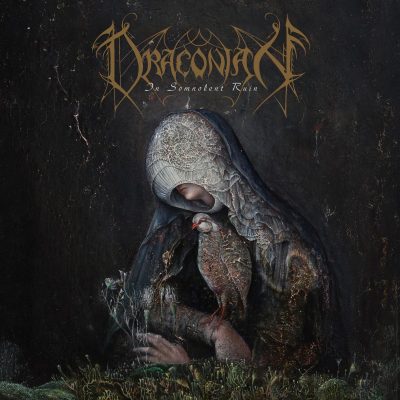
Let’s continue on the artistic side. The album artwork, created by painter Agostino Arrivabene, is absolutely stunning. Why choose to work with a real painting rather than a digital or photographic creation?
Nicklas : It was a deliberate choice to go back to something physical, something real , something you can almost touch. This is a genuine oil painting on canvas, made by an artist. I think that authenticity comes through naturally on the cover. It’s a departure from the digital composites you see on so many album covers today. It was Johan’s idea : He discovered Agostino’s work and introduced it to us. Personally, I find the result beautiful. I love the fact that this artwork is so closely tied to the music while also being a real, tangible object, an actual painting. And to connect it back to what we were saying about the videos: it’s the same philosophy. We know the footage was really filmed, that these are real images captured on location. With this cover, it’s the same, we know an artist sat down in front of a canvas with his oil paints and created this. And it’s a truly remarkable piece of art.
I understand the approach completely. Last time you worked with photographer Natalia Drepina for ‘Under a Godless Veil’, and today with a painter. I think this choice contributes enormously to the band’s visual identity. And actually, I recently saw that Tarja Turunen also collaborated with a painter for her latest album ‘Frisson Noir,’ and is even offering the original canvas for sale as a unique piece in her online store. At first I thought it was completely mad, then I remembered that when you deeply love a work of art, you sometimes dream of owning a piece of it. To close out this interview, any last words for the fans who have waited so long for In Somnolent Ruin?
Nicklas : This album has been a very long journey, and we’re so happy it’s finally out there and that we can hand it over to the world. It no longer belongs to us now and that’s a fantastic feeling: to take your work, put it out there, and let everyone take it and make it their own. That’s what’s most wonderful about being an artist!
Next week, we’re leaving for a tour of Latin America, and we’ll finally get to play some of these songs live. That will be a whole new chapter, another way of bringing these songs to life on stage. I truly hope people enjoy the album, love the songs, listen to them, and feel something when they discover them. That’s our greatest wish. Thank you!
Thank you for this enriching interview! Wishing you all the best for this new album, and I hope to see you again next year. (ed.note : European tour dates 2027)
